Arriving with luggage in Lisbon or Porto: check the last part of the journey
A short map distance can hide a difficult arrival. Break the journey into transport, the walk to the entrance and the route inside the building.
When you arrive with luggage, the final part of the journey deserves its own plan. Reaching a station near the accommodation is not the same as reaching the front door, and reaching the front door is not the same as reaching the room. Check those stages separately before booking.
For a Lisbon or Porto city break, begin with the bags you will actually carry. Two rolling cases, a stroller or a bag that you cannot lift comfortably each create different requirements. Describe those requirements directly when asking a property for advice.
Divide arrival into three stages
First, check the main transport journey from the airport or arrival station. Record any changes and the final stop. Second, examine the street route from the exit you will use to the building entrance. Third, ask about the path through the building to the room.
This separation makes uncertain information easier to spot. A property may provide good directions from a station while leaving the elevator or internal staircase unspecified. A journey planner may show the right stop without identifying the exit best suited to your needs.
| Stage | Questions to resolve |
|---|---|
| Transport | Which service, changes and final stop apply to the arrival time? |
| Station to entrance | Which exit, crossings, slopes or steps are involved? |
| Entrance to room | Are there stairs before an elevator or inside the unit? |
In Lisbon, check the exit as well as the station
Use the Metro's official network and accessibility diagrams to plan the route. Before traveling, check its line-and-lift status page and read any relevant operator notice. A diagram describes the intended network; equipment availability may change. Metro diagrams and current status page
Then look at the street approach. Visit Lisboa describes Alfama's steep inclines and cobbled lanes. That does not rule out every address there, but it does mean a short walking distance alone is not enough evidence of a manageable luggage route. Visit Lisboa: Alfama
Ask the property which entrance to use and whether its suggested approach avoids stairs. If you need a step-free route, confirm the complete path rather than relying on a general neighborhood description.
In Porto, plan the return to a higher street
Visit Portugal's accessible-tour guidance flags slopes in parts of Porto's Old Town. Use that as a reason to inspect the exact route, not as a verdict on every property. Visit Portugal: Porto accessible tour
A downhill arrival may feel straightforward while the departure with the same bags is more demanding. Put both journeys on the comparison sheet. If the property is reached by a lane, ask where a vehicle can actually stop and what remains between the stopping point and the entrance. Do not assume door-to-door access from a vehicle icon on a map.
Build one workable fallback
Choose a second arrival option before setting off. This may be another operator-confirmed route or a vehicle transfer whose meeting point, baggage capacity and final stopping place you have checked. Compare the total for the traveling party rather than a single advertised fare.
Keep the fallback specific: where you go, how you arrange it and which information you need. A vague plan to “get a car” is less useful when you are tired or cannot contact the host immediately.
For a late arrival, check the current service information for that evening. Do not use a daytime journey estimate as a promise about overnight availability.
Save a small arrival note
- The full address and entrance description.
- The expected arrival window and check-in instructions.
- The final transport stop and intended exit.
- Any steps or lifting required on the street and inside the building.
- The property's contact method and your specific fallback.
Save the note somewhere you can read without depending on a new connection. Send a concise enquiry using our pre-booking checklist if any important part remains unclear.
Use arrival to judge the room price
An accommodation saving may shrink when a difficult approach makes extra paid transport necessary. Include that cost in the whole-stay comparison, but keep effort and access needs visible alongside money. The cheapest workable option is different for different travelers.
Sources and planning notes
Reference pages checked on 12 November 2026. These are planning prompts, not a tested access route or a guarantee about elevators, pavements or vehicle access. Confirm current conditions with the transport operator and property before relying on a route.
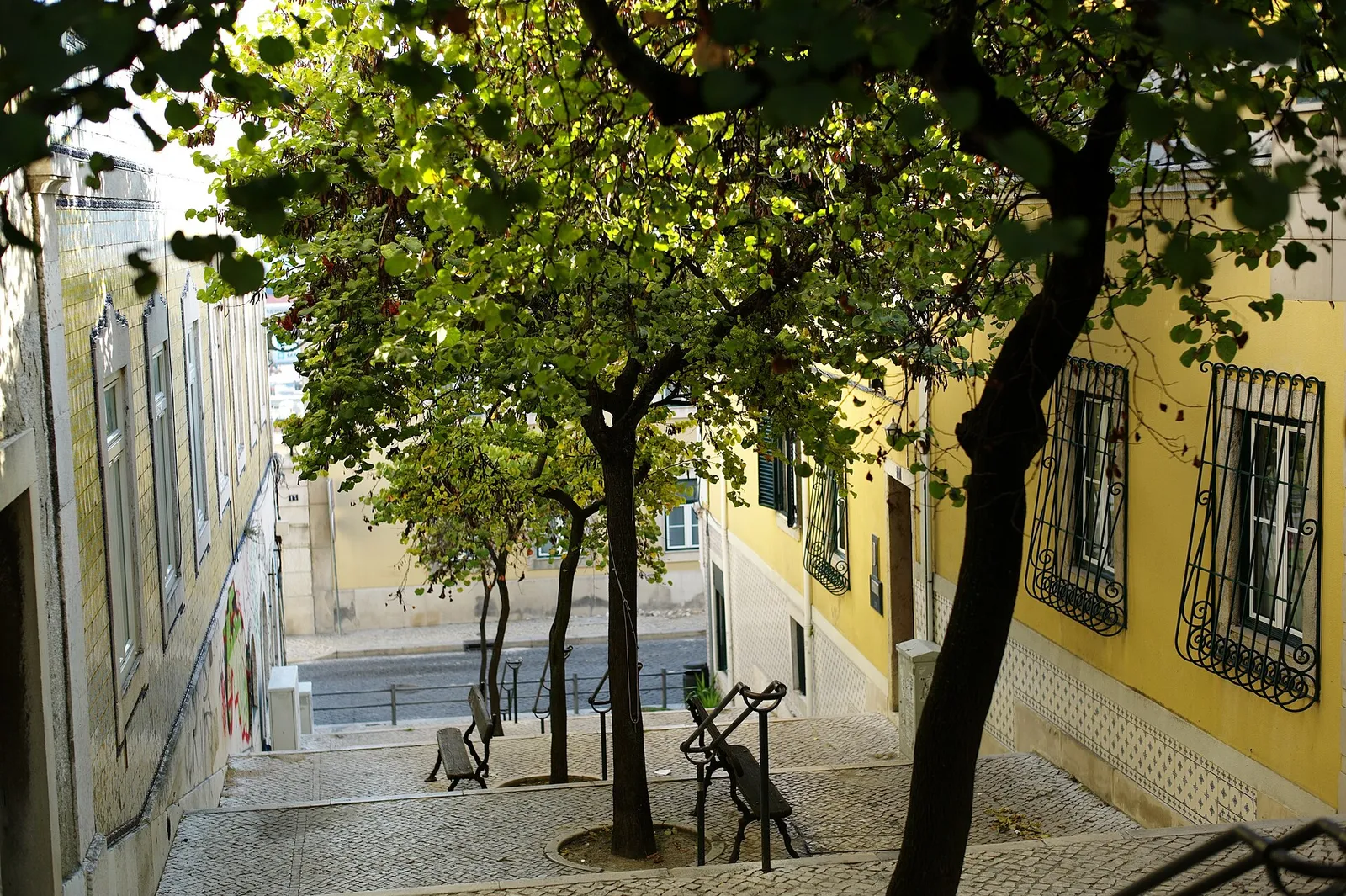
Cover photograph
Photo: Pedro Ribeiro Simões from Lisboa, Portugal, Lisbon typical street stairs (10334036624).jpg.jpg), CC BY 2.0. Source date: 2013-10-15 17:06. Wikimedia Commons supplied a proportionally resized version; no content changes by Roam & Plate.